
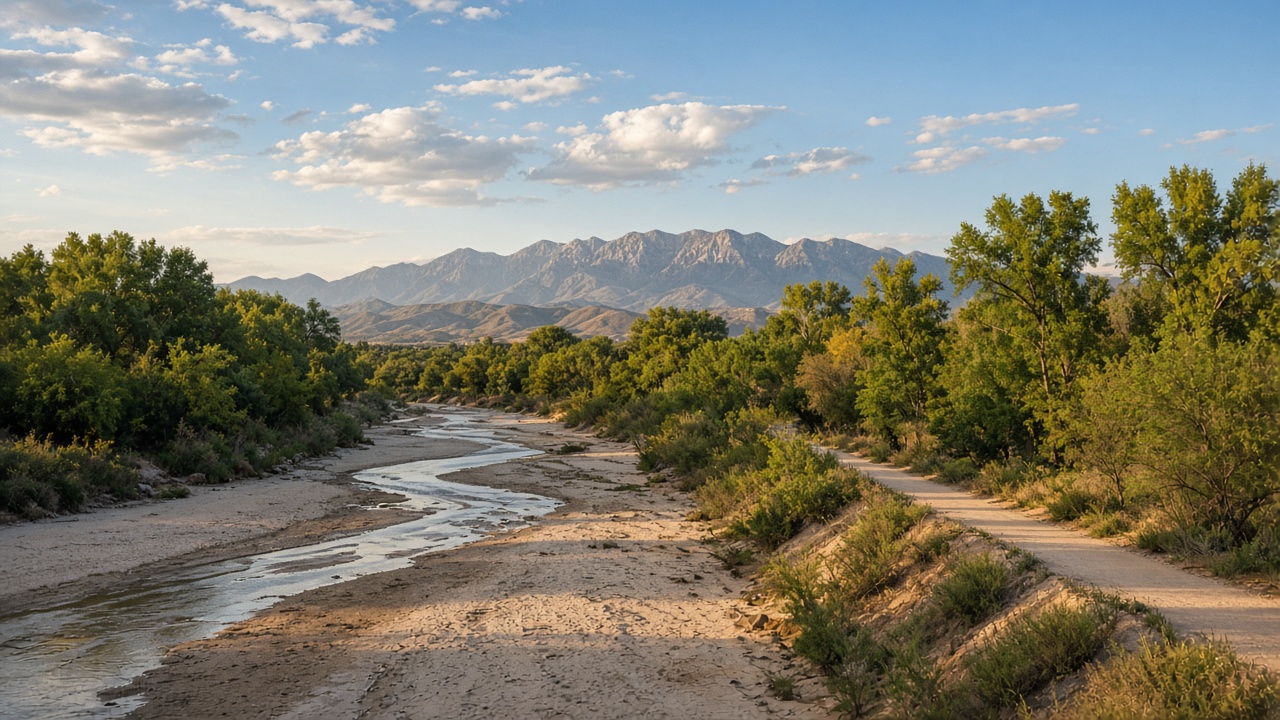
After the monsoon, the Rillito walk feels like a different river
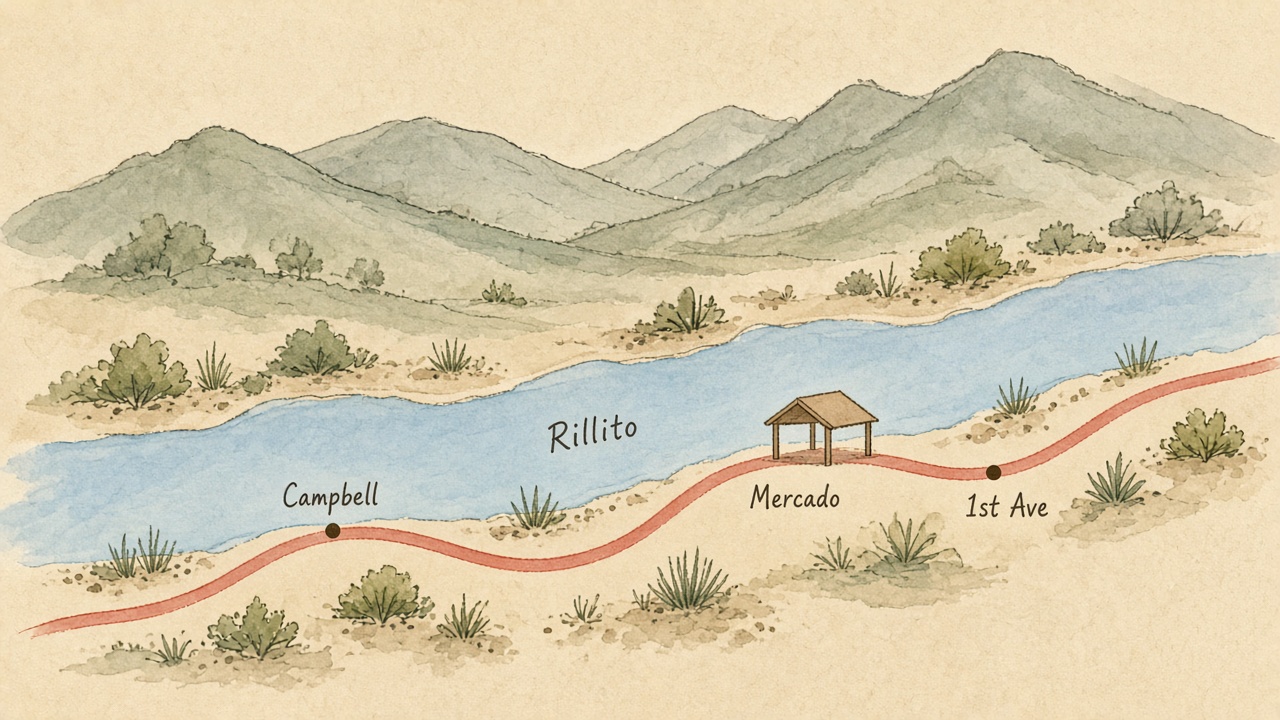
The path from Campbell to First is green again. What three weeks of water changed for walkers, dogs, and the little mercado at the trail’s edge.
TUCSON — For most of the year the Rillito is a pale road of sand. You can walk the bed, if you want to, and hear only the mesquite and the occasional bicycle bell on the path above. Then the monsoons come, and for a few weeks the wash remembers that it is a river.
I walked the path from Campbell to First Avenue six mornings in a row after the last heavy rain. On Monday the water was still a sheet, wide and brown, and the bank was soft enough that my shoe left a clean print. By Saturday it had narrowed to a bright braid, clear enough to see the stones. The cottonwoods had gone from dusty to green in the same span of days.
What the water changed is not dramatic, if you are looking for drama. No one I met that week talked about a flood. They talked about smell, and shade, and how the dogs wanted to stand in it.
Luz Herrera sets up a folding table under the ramada near First Avenue most Saturdays, and she has been watching the wash the way other people watch the weather. On Thursday a mixed mutt planted himself in a puddle no deeper than a hand and would not be bargained with.
The raised path held. A short stretch near Campbell had a lip of silt from Tuesday night, and a city crew had raked it by the time I came back at noon. Two walkers told me they had turned around on Wednesday because the underpass smelled like a river, which they meant as a compliment.
When it runs, people stay longer. They buy the late tomatoes. They talk.Luz Herrera
The mercado at the edge
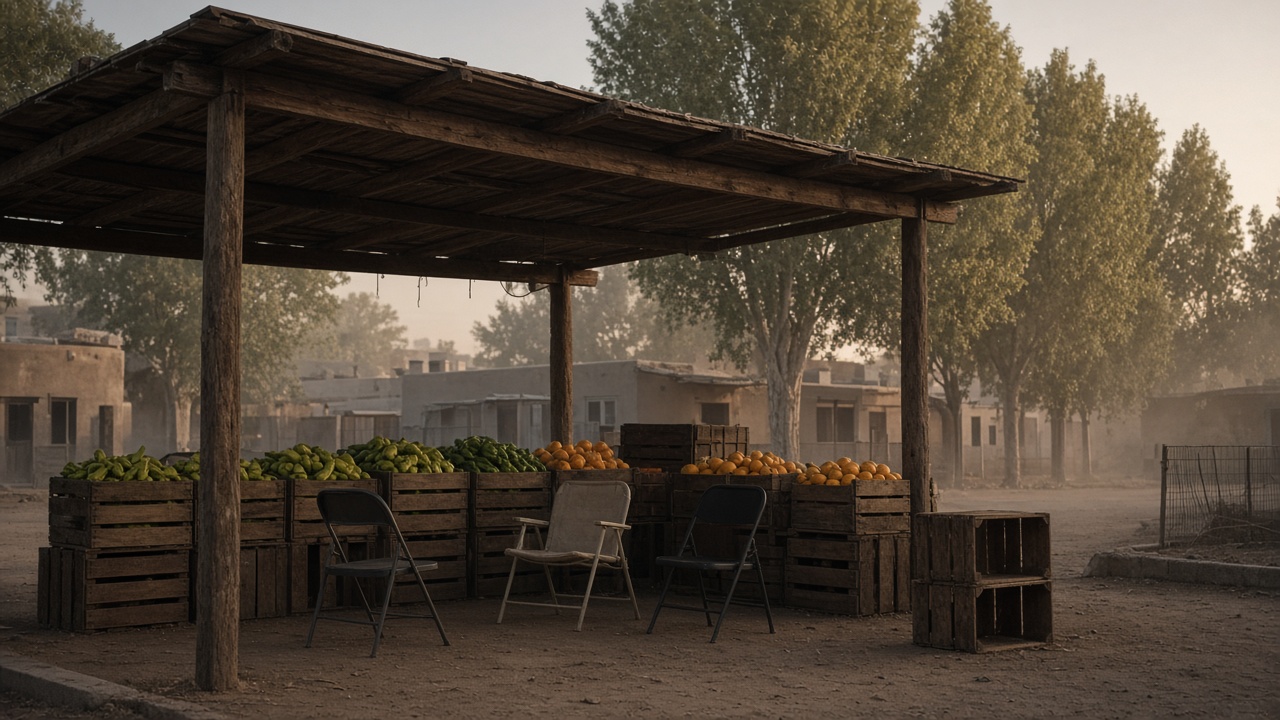
Mercado del Sendero is not a building. It is a ramada, a few crates, and a Saturday habit. Luz and two other vendors have been coming since last spring, first with chiles and citrus, then with whatever the week gave them. They face the path, not the street, which means the first customers are usually people who did not plan to shop.
On the Saturday I stayed, a man in a sun hat bought four grapefruit and stood eating one on the rail, looking at the water as if it might leave. A girl asked if she could hang a paper bird from the ramada; Luz said yes, if it came down before dark. By ten o’clock the crates were half empty and the shade was full.
The city does not run the mercado, and the mercado does not run the path. They simply share a corner. That is part of why it feels like a different river after the rain: the water brings people to a place that was already trying to be a place.
What lasts when the water goes
It will go. It always does. By late fall the braid will be sand again, and the cottonwoods will keep some of the green and lose the rest. Luz said she will still be there on Saturdays, until the mornings get sharp. The paper bird was already gone when I walked back at dusk.
What I will remember is smaller than a river. It is the sound of shallow water over stones, and the way a path that is usually a commute became, for a few mornings, somewhere people lingered. If you have not been down there since the rain, the stretch from Campbell to First was still running as of Friday. The mercado is there on Saturday, early, before the sun sits on the ramada.
 Elena SotoTucson
Write to Elena
Only Elena sees this, unless she chooses to share it.
More from Elena Soto
 Saturday starts before the sun at Mercado del Sendero4 min read